From Cody to Venice
Three Biennales. Fifteen years. And another conversation about to begin.
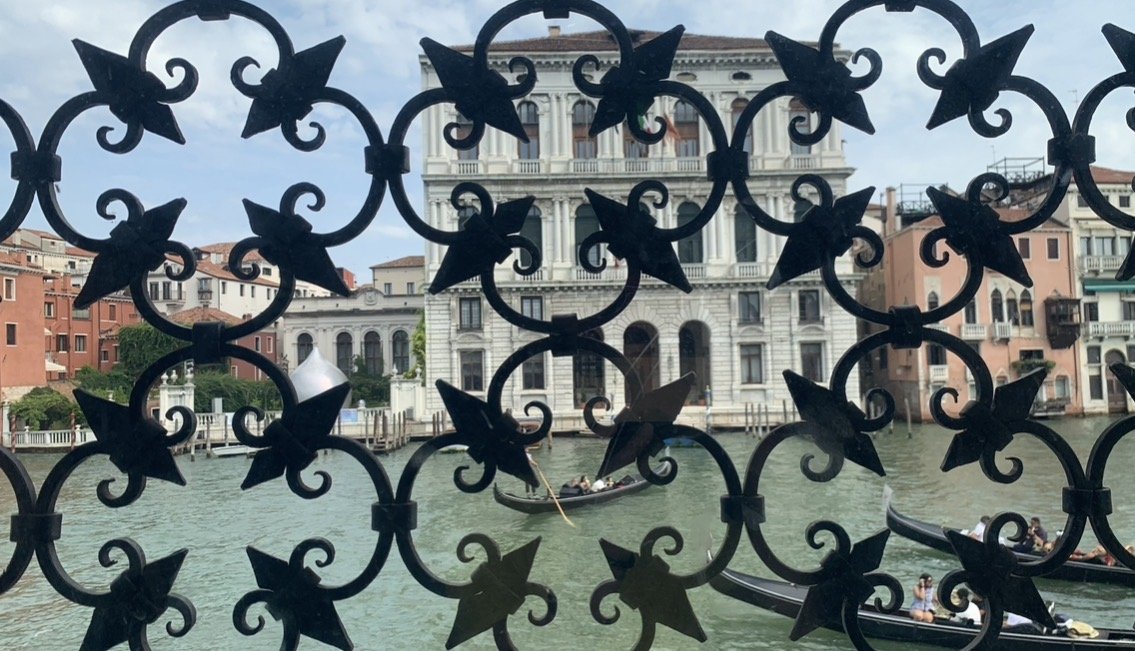
View from the Peggy Guggenheim Collection, Venice 2024
I’m returning to Venice Wednesday, September 30, and along with revisiting a city I love, I’ll be returning to the Venice Biennale—one of the places that has continually reminded me how expansive the conversation around contemporary art can be.
This will be my third Biennale: 2011, 2024 and now 2026. Looking back through photographs from those trips, I realized that each visit captured a different moment—not only in contemporary art, but in the questions artists around the world were asking.
This return is especially meaningful. My collector and friend Laura Nelson, who was with me for the Buffalo Bill Art Show & Sale in Cody, invited me to join her on this journey with the Utah Museum of Contemporary Art (UMOCA), led by Executive Director Laura Allred Hurtado and Curator of Exhibitions Jared Steffensen. Laura Nelson and I have known one another for nearly a decade; art brought us together, but her friendship, encouragement and belief in my work have come to mean so much more.
In preparation for Venice, UMOCA sent us Sarah Thornton’s Seven Days in the Art World, an exploration of the interconnected worlds of artists, collectors, auctions, curators, exhibitions and museums. Its timing feels particularly relevant: an artist makes the work, but an artistic life grows through a much larger community.
Full Circle Moment
There’s something wonderfully full-circle about moving almost immediately from Cody to Venice. I’ve often found myself working in the space between traditional and contemporary art, and Cody was another opportunity to bridge those worlds—bringing my contemporary perspective into a setting rooted in Western artistic traditions. I was honored to be included among artists at many different stages of their careers, all of us, in our own ways, making the work, putting it into the world and hoping it finds a connection.
I was especially fortunate to feel the support around me. Having Laura Nelson, Rich Walje, Donna Poulton and others there believing in me and my work was noticeable, meaningful, and something I didn’t take for granted.
Now, only days later, I’m heading to Venice and a much broader international conversation—curious about what artists from around the world are making, questioning and finding relevant today.
Different places, different work, different stages of a career—but in many ways, we’re all participating in the same larger conversation.
WHAT IS THE VENICE BIENNALE?
For those unfamiliar with it, the Venice Biennale is one of the world’s oldest and most influential international exhibitions of contemporary art. Founded in 1895, it brings artists, curators and audiences from around the world to Venice, with countries presenting exhibitions in their own national pavilions alongside a major International Art Exhibition.
Each edition of the International Art Exhibition is given its own title and curatorial theme—a framework for some of the larger ideas and conversations unfolding that year.
Much of it takes place in the historic Giardini and Arsenale, but contemporary art spills into palazzi, churches, gardens and unexpected spaces throughout Venice.
Three Biennales, Three Perspectives
2011 — ILLUMInations
54th Venice Biennale exhibition
My first Biennale was in 2011. Curated by Bice Curiger, ILLUMInations explored ideas surrounding nations, identity, belonging and the ways art can illuminate the world around us.
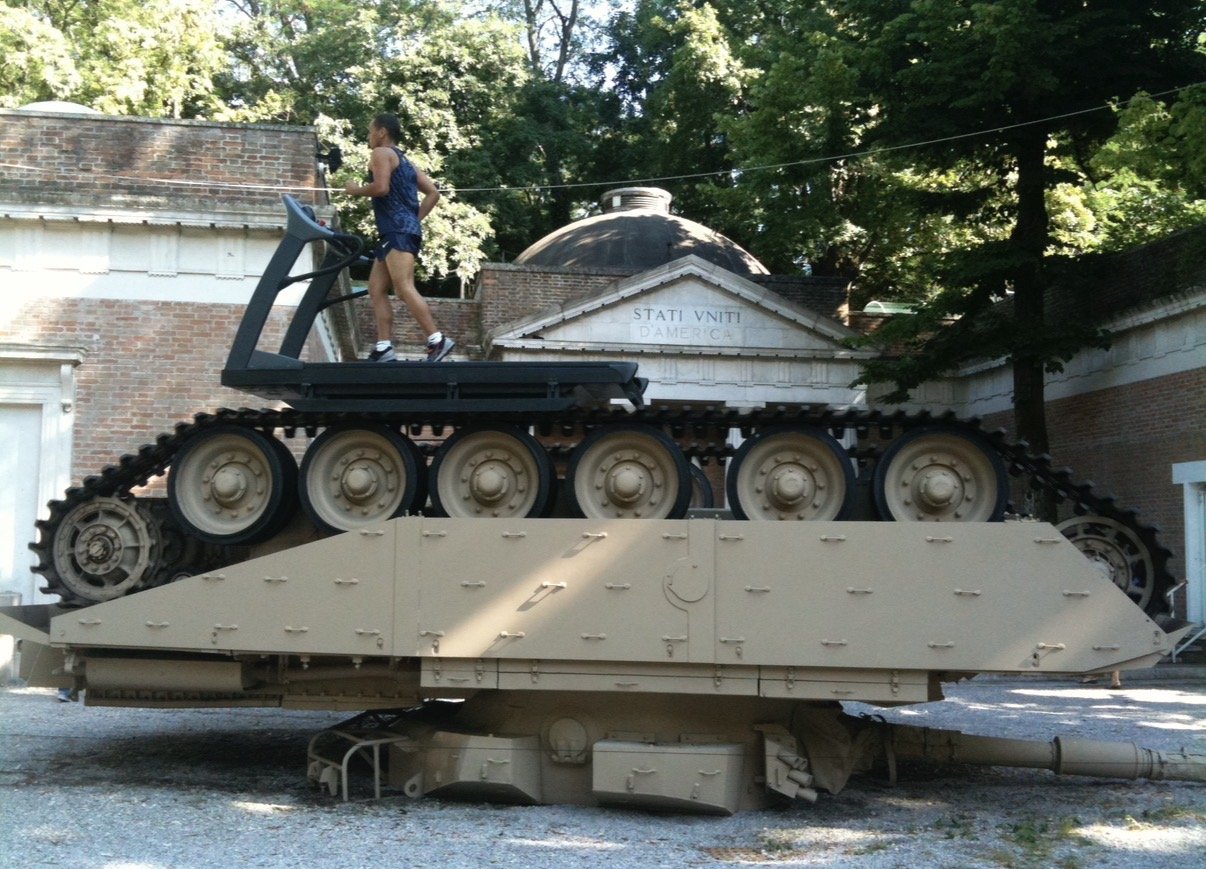
One work I still remember vividly is Allora & Calzadilla's Track and Field at the U.S. Pavilion — an overturned military tank with a functioning treadmill on top, activated by a U.S. Olympic athlete. It brought together ideas of endurance, competition, military power and national identity in an image that has stayed with me all these years.
Allora & Calzadilla, Track and Field, U.S. Pavilion — Venice Biennale, 2011
2024 — Foreigners Everywhere
60th Venice Biennale exhibition
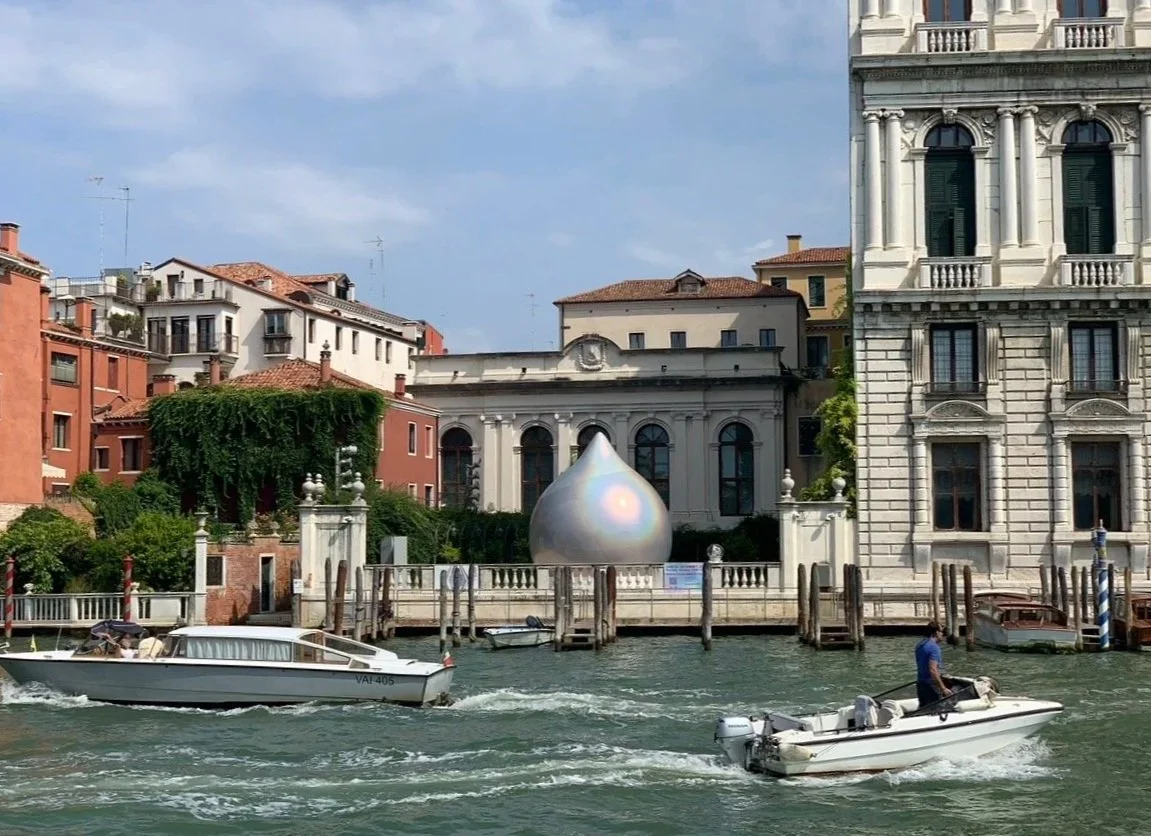
When I returned in 2024, the conversation had shifted. Curated by Adriano Pedrosa, Foreigners Everywhere explored migration, displacement, identity and the experience of being foreign or outside dominant cultural narratives.
For me, the question underneath it was simple and enormous:
Who belongs?
One of the things I love about experiencing contemporary art in Venice is the juxtaposition itself—the very old and the very new occupying the same extraordinary city.
2026 — In Minor Keys
61st Venice Biennale exhibition
And now I’m returning again.
This year’s Biennale, In Minor Keys, was conceived by the late Cameroonian-Swiss curator Koyo Kouoh, who died unexpectedly in May 2025.
By then, Kouoh had already established the exhibition’s conceptual framework, selected its artists and works, and assembled her curatorial team. With the support of her family, La Biennale chose to carry her vision forward after her death.
I find something particularly moving about that—the curator is gone, but the conversation she created continues.
Her vision turns toward something quieter: listening, contemplation, memory, beauty, healing, community and the possibilities that emerge when we make space for quieter voices.
Perhaps appropriately, I’m arriving at this Biennale with a different perspective myself.
THREE BIENNALES. THREE CONVERSATIONS.
2011 — ILLUMInations
Nations. Identity. Belonging. What can art illuminate?
2024 — Foreigners Everywhere
Migration. Outsiders. Identity. Who belongs?
2026 — In Minor Keys
Listening. Contemplation. Memory. Community. What might we hear when we become quiet enough to listen?
These aren’t descriptions of every artist or every work. They’re the larger threads I recognize in the Biennales I’ve experienced—and, in 2026, the conversation I’m about to step into.
The art changes.
The world changes.
And we change, too.
ACROSS CENTURIES
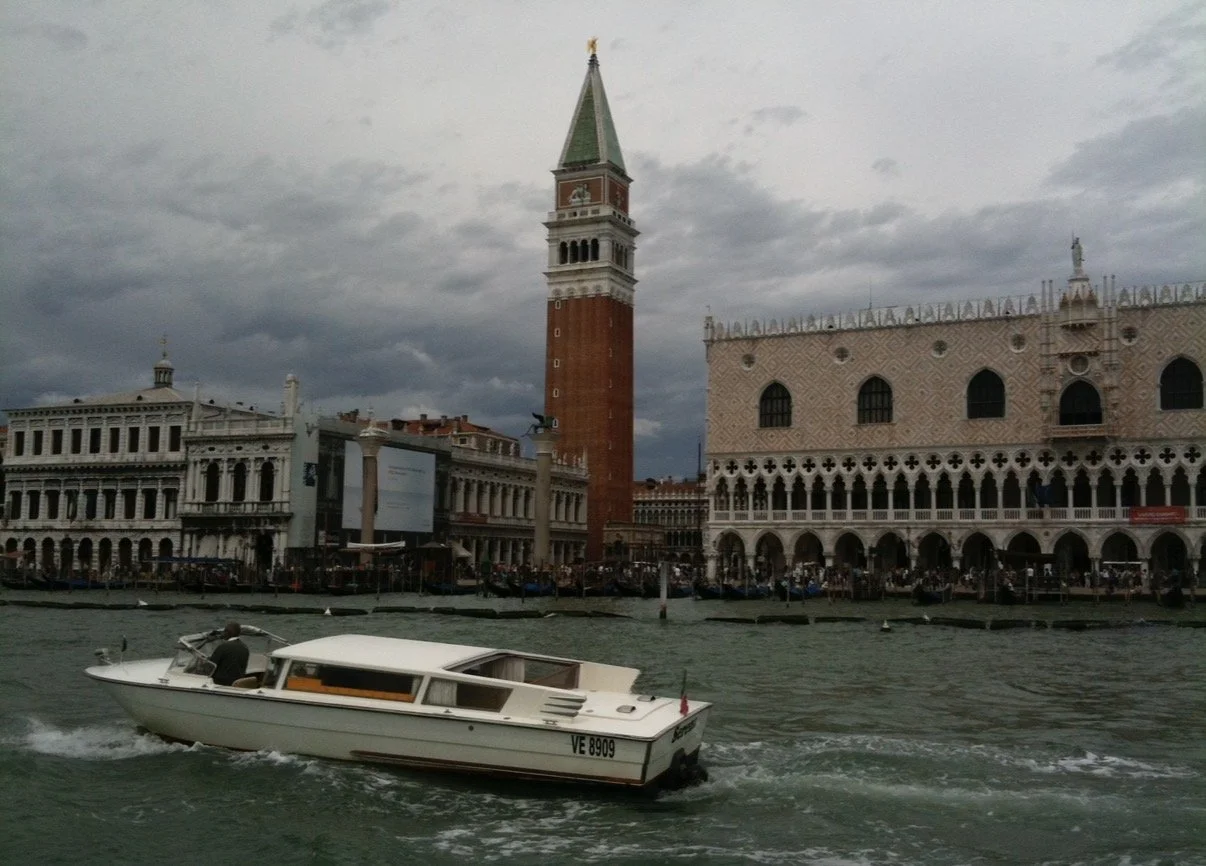
Our itinerary will take us across centuries.
We’ll begin in nearby Padua with Giotto’s 14th-century frescoes in the Scrovegni Chapel, then move through the Peggy Guggenheim Collection, Palazzo Grassi and Punta della Dogana before immersing ourselves in the Biennale’s national pavilions at the Giardini and the extraordinary historic Arsenale.
Along the way, we’ll encounter painting, sculpture, installation, film and performance, as well as exhibitions by artists including Marina Abramović, Jenny Saville, Michael Armitage, Lorna Simpson and Arthur Jafa.
It’s that juxtaposition that fascinates me: some of the newest ideas in contemporary art unfolding within one of the oldest and most visually layered cities in the world.
I’m especially curious about what artists from different parts of the world find relevant right now. What are they thinking about? What are they questioning? What materials are they using? How does history—or the physical place in which we encounter an artwork—change the way we see it?
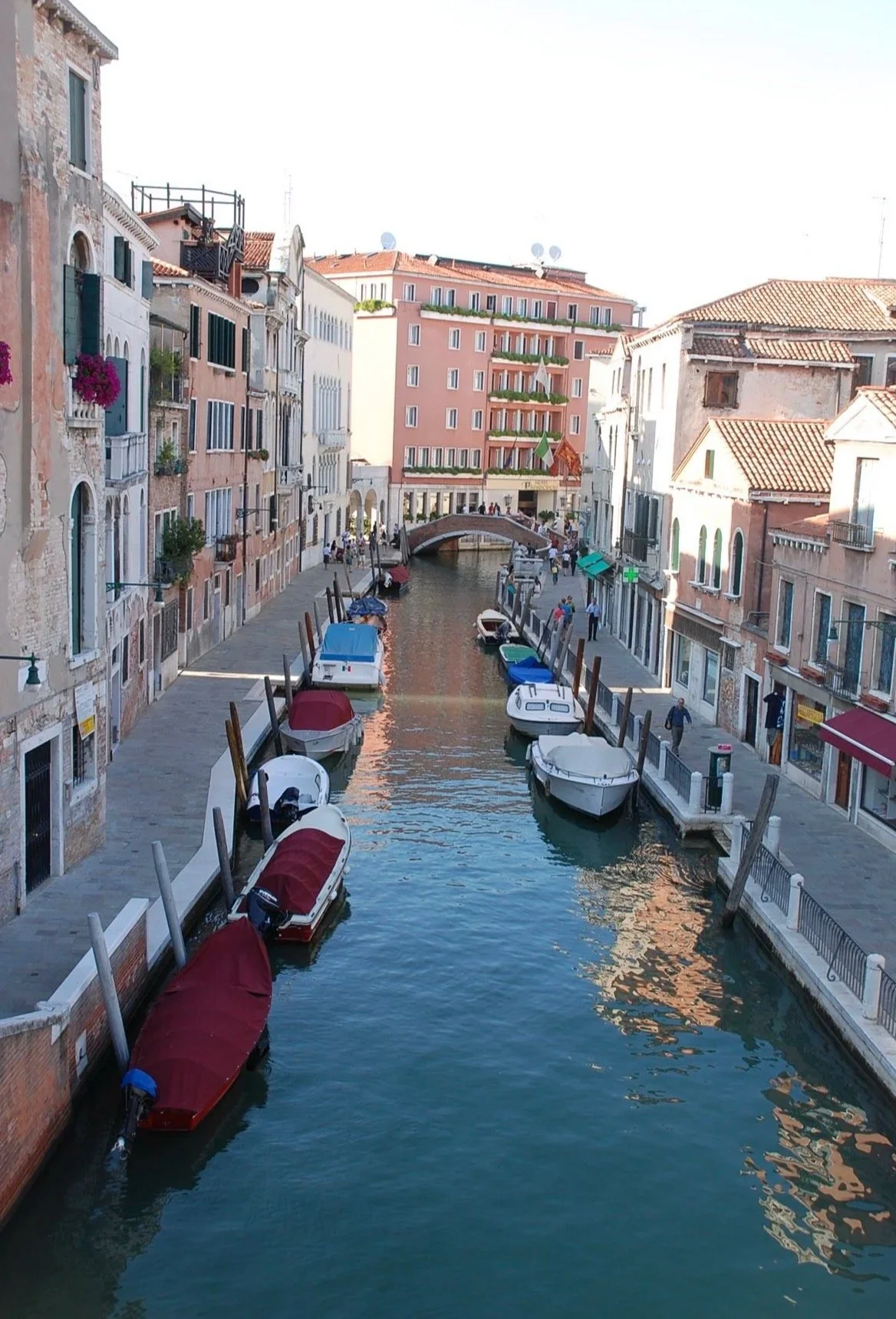
View from my hotel in 2011
RETURNING WITH DIFFERENT EYES
I’m returning to a place I’ve been before, but I’m curious to see what I notice differently this time.
I’ll be looking closely, asking questions and paying attention to what draws me in—what surprises me, challenges me, moves me, or perhaps leaves me completely perplexed.
That may be what I value most about immersing myself in art outside my own studio: the opportunity to encounter ideas I wouldn’t have arrived at on my own.
I don’t know what I’ll bring home from Venice, and I think that’s part of the point. Some things may stay with me immediately; others may surface months from now—in a thought, a material, a question, or unexpectedly in the work itself.
For now, I’m simply looking forward to being there—to looking, listening, learning and allowing myself to be surprised.
And when I return, I’ll see what follows me back into the studio.
I look forward to sharing what stays with me.
— Janell